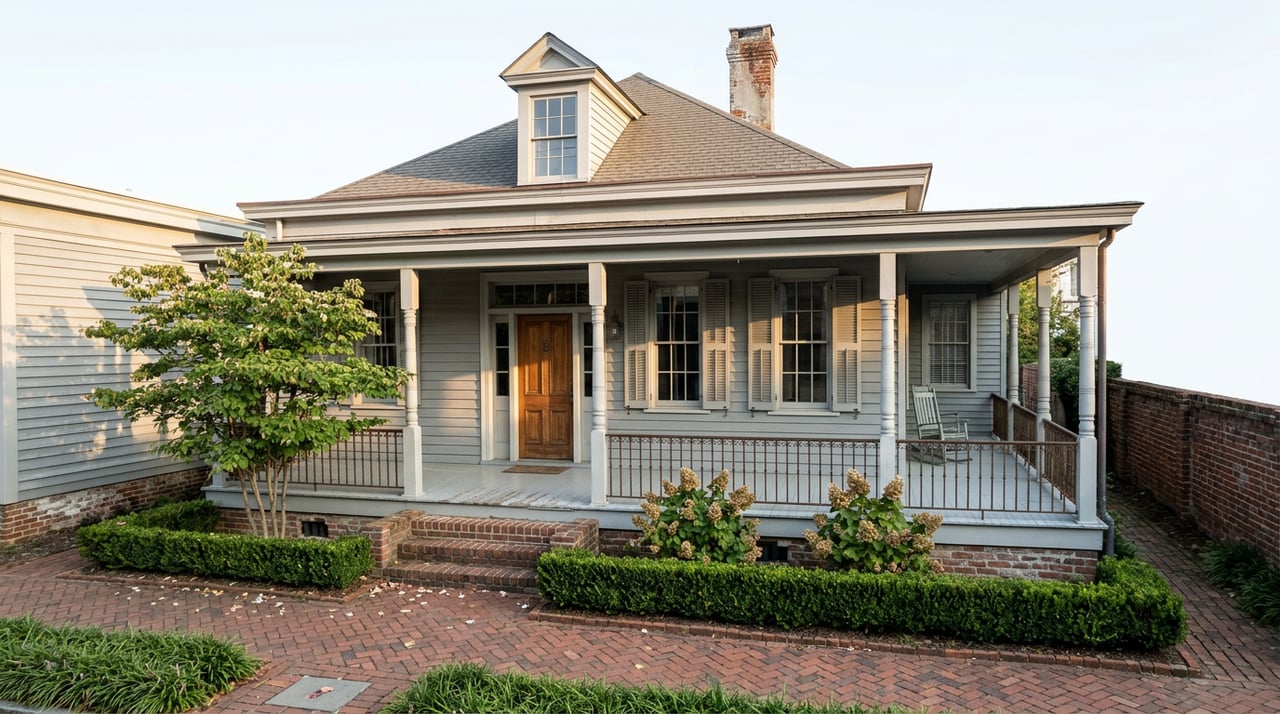
Every Maryland home sale includes a box that says whether the property sits in a historic district. Sellers check yes or no, and if the answer is yes, Maryland's disclosure form flags it as a fact that could limit potential renovations. That box tells you the rules apply. It does not tell you whether the fence around the backyard, the sign over the front door, or the roof that was replaced two summers ago ever actually got permission under those rules.
That gap is the whole story if you are looking at a home inside Berlin's Historic District.
What the June Agenda Actually Shows
The Berlin Historic District Commission meets only when someone files a case, and the town posts every agenda publicly. The one filed for June 3, 2026 is a useful cross section of what actually crosses the commission's desk in a given month: new fencing at 20 S. Main Street, outdoor renovations at 2 N. Main Street, new signage at 208 N. Main Street and 4 Jefferson Street, repairs to a parking lot at 10 S. Main Street, alterations and signage at 18 William Street, and general repairs at 316 S. Main Street.
Then there is case #HDC-6-3-26-17: 16 S. Main Street, retroactive approval of roof repairs.
Retroactive approval means the work already happened. Someone replaced a roof, and only afterward did the paperwork catch up to the shingles. That is not a rare exception buried in the town's records. It is sitting on the same agenda as routine fence and signage requests, which tells you something the disclosure box never will: exterior work in this district sometimes gets done first and approved second, if it gets approved at all.
The Rule Follows the House, Not the Person Who Broke It
Berlin's Historic District Commission is the body responsible for reviewing and authorizing exterior changes to any property inside the district, and applications go through the town's Planning Department before they reach a public HDC meeting. That authority attaches to the address. It does not reset when the deed changes hands.
This matters because Berlin's commissioners have already flagged this exact blind spot in public. Local reporting picked up by the Maryland Association of Historic District Commissions described a case where a young couple's fence request turned into a broader conversation among commissioners about wanting future buyers to understand historic district rules before they close, not after. The commission wasn't talking about people who ignore the rules. It was talking about people who never knew the rules existed until they were already the owner of a house with an open compliance question.
Buy a home in Berlin's Historic District and you are not just buying the house. You are buying whatever exterior approval status came with it, good or unresolved.
What Actually Needs a Case Number
The instinct is to assume historic district review only kicks in for additions or major renovations. The June agenda argues otherwise. Fencing, signage, parking lot repairs, and general repairs all required their own case numbers that month. The commission's job is to weigh proposed work against the town's own design standards, adopted as the Town of Berlin Design Guidelines & Standards on December 9, 2024, and those guidelines cover a wider range of exterior changes than most buyers expect walking in.
Berlin's code enforcement staff also routinely inspect the exterior of properties in town for maintenance and compliance issues, separate from any sale. A historic home does not get quietly grandfathered once the paperwork is out of sight. The obligation is ongoing, not a one-time hurdle cleared at some point in the past.
When You'd Actually Need to File
If you buy a home in the district and want to make any exterior change, from a new fence to a sign to a repair that alters the look of the house, the case has to go on a public agenda before work starts. The town posts filing deadlines throughout the year, one per month, and cases are only heard once an application clears that deadline. As of this writing, the next posted window is October 5, 2026.
The commission does not meet on a fixed monthly clock. It meets when a case has been filed by the deadline, which means a renovation timeline in Berlin's Historic District is only as fast as the next filing window, not as fast as your contractor's schedule. Miss a cutoff and the work waits a full month, whether that work is a new fence or a roof already sitting half finished.
The Diligence Question Nobody Asks Before Writing an Offer
Most buyers touring a historic home ask about the roof, the systems, the foundation. Almost nobody asks whether the roof they are looking at, or the fence, or the sign on a mixed-use property, was ever actually approved by the commission that has jurisdiction over it.
That is the question worth asking before you write an offer on anything inside Berlin's Historic District. The town's Planning Department, which provides staff support to the commission under Acting Planning Director Ryan Hardesty, maintains the case files and can tell you whether a specific address has open, pending, or retroactive cases on record. A seller's disclosure form will tell you the property sits in the district. It will not tell you whether everything visible on that property already has a certificate attached to it.
Berlin's Historic Commercial District includes 47 structures listed on the National Register of Historic Places, which gives some sense of how much of downtown falls under this kind of review. The protection is not limited to a few landmark buildings. It is woven through the residential blocks around Main Street as thoroughly as it is through the commercial core.
A Few Questions Worth Asking Before You Close
Does the disclosure form checking "yes" for historic district tell me anything about specific work done to the house? No. It confirms the district status, which is a factual field on Maryland's form. It says nothing about whether individual exterior changes, fencing, signage, roofing, additions, ever received a Certificate of Approval from Berlin's commission.
How would I find out if a specific property has open or retroactive cases? Berlin's Planning Department maintains HDC case records and can confirm whether a specific address has pending, approved, or retroactive filings. This is worth asking about directly rather than assuming a clean listing means a clean compliance history.
If I want to change something after closing, how long should I plan for? Applications are due by a posted monthly deadline, and the commission only meets once a case has been filed. Build in time for at least one filing cycle before you plan contractor start dates.
Berlin's historic streets are a large part of why people want to live here in the first place, the tree-lined blocks, the Victorian storefronts, the sense that Main Street still looks like Main Street. None of that is an argument against buying here. It is an argument for asking the one question the paperwork skips: not whether the district applies, but whether the house in front of you is already square with it.
If you are weighing a home in Berlin's Historic District, or anywhere else along the Maryland and Delaware shore, Coastal Life Realty Group can help you get the specific answers a standard disclosure form leaves out. Get Your Instant Home Valuation and let's talk through what a property in this district actually comes with before you write an offer.